NASP Letter To MPs | 18th March 2026
The National Associations Strategic Partnership (NASP) has shared the following letter to key DVSA ministers to express our shared concerns regarding recent changes to rules for booking category B driving tests (GOV.UK).
NASP Letter
Wednesday 18th March 2026
Dear Members
Following our recent correspondence dated 9th March 2026, NASP has since met with DVSA to discuss the implementation of changes to the rules regarding the booking of category B driving tests.
To add to concerns raised in our previous correspondence, NASP – the main stakeholder in this industry with over 20k members between our three associations – has now been informed, with no prior discussion or opportunity to guide and advise, that legislation is being proposed that will make it a criminal offence for Approved Driving Instructors to book a Category B driving test. This despite:
- No confirmation from the Department for Transport or DVSA on the numbers of driving instructors found to be engaging in unethical activity related to test booking, but with one DVSA representative stating that the figure was as low as 3%;
- assurances provided by DVSA that the new Online Booking System currently under development by DVSA would be fit not just for the current situation as it relates to lack of test availability, but also for future situations where some sense of normalcy has been restored (making it illegal for driving instructors to book tests signals no return of this functionality once the current crisis is resolved);
- the fact that driving instructors will still be trusted to book other categories of driving test, for example LGV, HGV, and motorcycle tests;
- the principle that driving instructors are paying customers of DVSA, who, should this legislation be allowed to proceed, will lose a key benefit of being regulated by DVSA, one which allows many of them to carry out their role and operate their businesses more effectively and efficiently for members of the public;
- the absence of an output assessment of the proposed changes, including predicted financial losses to businesses operating in the sector, despite assurances that one would be scheduled, and our belief that one has taken place.
NASP strongly believes that the move to make the practice of driving instructors booking a driving test illegal is a serious overreaction to the current problem of poor test availability, and one which is unnecessary.
We would reiterate our comments and concerns outlined in our previous correspondence, namely:
- Removing road safety professionals from the decision-making process of whether a member of the public is ready for a driving test is a mistake which could have serious consequences for figures related to the safety of newly qualified drivers;
- The safety of driving examiners will be compromised given the expected rise in vehicles being
used for tests with no dual controls; - The continued disenfranchisement of driving instructors being enacted by DVSA and Department for Transport, based on the results of a highly questionable consultation that relied overwhelmingly on responses from members of the public with no professional insight of the wider challenges being faced by Government, road safety practitioners, and industry, is alarming.
We call on all Members and Ministers to urgently review the planned legislation and consider in depth the points we have raised.
Regards
Stewart Lochrie
Approved Driving Instructors National Joint Council
Carly Brookfield
Driving Instructors Association
Peter Harvey
Motor Schools Association
To download the full NASP statement, click here.
Charli Howe, ADINJC General Council

Introduction
During his seminar at ICE Live 2026, Dr Rolison highlighted three key purposes that effective wrap-around education must serve:
- Prepare the learner
- Guide the experience
- Translate experience into action
Each stage plays a crucial role in turning immersion into insight.

Preparing the Learner: Setting the Conditions for Learning
Preparation happens before the headset goes on, and it is just as important as the VR content itself.
The goal here is to ensure that learners:
- Are watching for learning, not entertainment
- Are emotionally and cognitively ready
- Do not misinterpret what they are about to see
This aligns with educational psychology: learners need a clear mental framework to correctly process new information.
Effective preparation might include:

Setting the scene
- Placing the learner in a realistic context they recognise e.g. “This is a situation that happens every summer in the UK.”
- This immediately signals relevance

Challenging existing beliefs
- A quick poll such as ‘Would you swim in a quarry or lake on a hot day?” is powerful.
- If the upcoming VR experience contradicts their current opinion, learners need time to reflect and mentally adjust during the experience.

Framing the objective clearly
- For example: “Your job in this experience isn’t to be brave, it’s to notice what happens when someone enters cold, unsafe water.”
- This directs attention and reduces misinterpretation

Guiding the Experience: Learning in the Moment
During the VR experience itself, learners can still be gently guided without breaking immersion.
This helps them notice key moments and understand why they matter.
Common tools include:
- On-screen prompts
- Environmental cues
- Audio narration or subtle guidance
These prompts act like signposts and direct attention to learning opportunities, rather than allowing learners to drift into passive viewing or emotional overload.

A Practical Example: Water Safety VR for Young People
One example shared was a water safety VR experience designed for teens and young adults.
The scenario follows a group of young people at a quarry, shown through a 360-degree perspective.
As the group debates entering the water, learners observe:
- The social pressure to join in
- The deceptively calm appearance of the water
- The reality of cold-water shock
- The hidden dangers associated with quarries
The experience can be delivered via a VR headset or through social media platforms that support 360-degree video, making it accessible beyond formal classroom settings.

Key learning objectives include:
- Making unsafe water entry unappealing
- Understanding cold-water shock
- Learning and remembering Float to Live
But these objectives only land properly when surrounded by strong wrap-around education.

After the Experience
Once the headset comes off, the learning process is far from over.
In fact, this is where the most important work begins.
The emotional impact of VR needs to be processed, analysed, and translated into real-world understanding.

Immediate Emotional Check
Start by acknowledging emotion:
- “What shocked you the most?”
- “What made you uncomfortable?”
This helps regulate emotional responses and prevents learners from dismissing the experience as “too extreme”, a common psychological defence mechanism.

Learning Debrief
Next, connect reflection directly to the learning objectives:
- “Why did floating work better than swimming?”
- “What actually caused the danger?”
This consolidates knowledge and corrects misunderstandings.

Reality Transfer
Finally, anchor learning to real life:
- “Where might this happen near you?”
- “What local places feel safe but actually aren’t?”
This step is critical.
When learners visualise risks in their own environment, they move from passive understanding to problem-solving.
This leads to deeper, longer-lasting learning.

The Power of Polls and Social Learning
Polls, both face-to-face and online, are a simple but highly effective tool.
- In-person polls spark discussion and help groups recognise shared risks in their local areas.
- Social media polls and pinned comments allow facilitators to address misunderstandings publicly and link responses back to learning objectives.
This keeps the learning conversation alive beyond the initial experience, especially when followed up with additional posts or reminders.
Another effective technique is social recognition, such as asking:
“Who in your friendship group would be the first to jump in?”
This helps learners see risk not just as an individual choice, but as a social dynamic.

Simple Action Rehearsal: Installing Safer Scripts
One of the most powerful wrap-around techniques is action rehearsal. For example, asking learners to complete the sentence:
- “If someone went under, I would…”
This mentally rehearses safer behaviours, making it more likely they’ll be recalled under stress.

Wrap-Around Education Across Other VR Topics
The same wrap-around approach has been successfully applied to road safety VR following identical principles:
- Preparation
- Guided experience
- Structured reflection and reality transfer
Across all topics, the message is clear: VR does not teach by itself.
Without facilitation, learners often cope with shock by dismissing it, minimising the risk, or distancing themselves emotionally.
Wrap-around education prevents this by helping learners process, reflect, and act.
Introduction
The National Associations Strategic Partnership (NASP) has shared the following letter to key DVSA ministers to express our shared concerns regarding recent changes to the practical test booking system (GOV.UK).
NASP Letter
March 6th 2026
Dear Ministers
We write to you today, as the recognised steering group for the professional driver training industry, to express our ongoing concern over the effective barring of driving instructors from the practical test booking platform – and additionally to reiterate our concern at the manner in which the consultation that informed this decision was conducted.
Approved Driving Instructors should play a key role in helping to gatekeep a driving licence, helping to ensure that only those ready to drive independently proceed to the practical driving test stage. Indeed, one would expect that having a system which requires a regulatory license to deliver driver training would imply that trainers actually played such a crucial gatekeeper role. However, in reality, we must recognise that this is a questionable regime, as trainers do indeed require a licence to teach, but if you want a driving licence in the UK, you can learn to drive with anyone who has held a full licence for three years and is over the age of 21.
So, we already have a clear challenge in the learning to drive process in that Learners can learn whatever they want (due to a lack of a concrete curriculum of learning to drive), learn with almost whoever they want, and go to the test centre whenever they feel they’re ready to drive on their own, after they’ve taken a theory test. A very simplistic way of looking at it admittedly, and whilst acknowledging the average learner will undertake at least some training with an ADI, as DVSA collects very little solid data on pupils during the learning process (let’s be honest, the average number of hours a learner undertakes in the UK is derived from an occasional survey, sometimes under duress at the end of a practical test, and isn’t a result of any consistent tracking of the majority of pupils, which should be perfectly feasible to deliver in a licensing regime where all pupils have to pass through formal gateposts, where there is ample opportunity to collect better data) it really isn’t a perfect science in terms of knowing what people are learning, for how long and with whom. And at the heart of it, we appear to have engineered a system which favours consumer wants versus road safety needs.
Now, with effectively blocking ADIs out of the booking platform, we have further removed what should be the professional trainer gatekeeper’s ability to identify when a pupil should move to test stage and access a driving licence, enabled even more Learner and inexpert decision-maker choice, and engineered in potentially more risk. Before this decision, due to the core issue of test waiting times (i.e. a lack of test supply), trainers were already facing pressure from pupils and parents to get them test ready and keep them test ready, as well as get the pupil ready to leap for any test the pupil randomly managed to grab in the system – whether they were ready for that test or not (because, consumer choice again – let the Learner driver choose when they’re ready to take a test and let a driving test slot be used to be that gauge…when we could actually better use a licenced professional to be that gauge). And if a trainer could not, or would not, take a pupil for test on the day the pupil had booked it, the pupil would simply try and find a trainer, licenced or unlicenced, they had never used before (and who has no knowledge of that pupil’s ability) or go in their own car – as evidenced by the rise in private runners on test in the last 5 years. And now? Well, we’ve decided that the (in practice) low risk of an actual ADI being a bad actor in the booking system is far worse than the risk of the inexpert and inexperienced pupil deciding when they should take a driving test and get a driving licence. By the way, we asked about the risk profile of private runners on test and were told that they didn’t really present a significant issue – but perhaps that is because DVSA Examiners themselves have told us of an unofficial policy of deliberately exposing those private runner candidates to less risky routes…
Not only (using this sledge hammer to crack a nut approach move to block trainers from the booking platform, penalising the majority for the actions of a tiny minority) have we potentially engineered more risk into the system and onto our roads, the decision has also had the, perhaps unintended, consequence of lumping ADIs in with third-party bad actors in the booking system, further disenfranchising ADIs at a time when their trust and confidence in the agency is at a low. Couple that with communications campaigns telling trainers to ensure their pupils are test-ready before they book a test, and then arguably taking away a trainer’s real ability to police that, and you can see why the profession is unhappy with this decision. And as insiders (unlike the seemingly easily duped public stakeholder) this stakeholder doesn’t easily buy bad actors in the booking system being a) ADIs at all and b) the issue of test supply, when we know failed Examiner recruitment and other failures in test resourcing, continue to be the critical issues, so heralding a ‘fix’ here that harms trainers, and potentially novice and wider road user safety, has not gone down well in the profession.
In addition, the industry feels that the manner in which the consultation and resultant change in policy was made is also challengeable. As one stakeholder commented, in the unsurprisingly tense stakeholder meeting that had to be called after the mishandled announcement of the change, this was a referendum not a consultation, yet it was billed as a consultation. Challenges around how the responses of the non-expert, non-educated public consumer – who it was entirely predictable were going to ‘vote’ for what they wanted (versus what they needed to be safe drivers) – would be balanced against the much smaller voice of the licenced, expert professional trainer were effectively dismissed in the lead up to the consultation. Causing further consternation and concern was, on NASP raising the same concerns post-consultation, and asking how this balance had truly been struck in decision-making, was a question from DVSA as to why we’d never raised the issue before or during the consultation period. The reality is we did raise those concerns, they are minuted (from the joint NASP/DVSA meeting we raised them in) and we still don’t have a satisfactory or compelling response on this key challenges. Nor have we seen an output evaluation from the entire consultation that demonstrates how the risks of the decision to close out trainers from the booking system had been fully evaluated before policy changes were made.
We do respect that a current consultation on Minimum Learning Periods will allow some opportunity for the role of ADIs as professional gatekeepers to be properly considered. However, even in this proposal, the role of the non-professional is apparently being snuck in with the suggestion that any accompanying driver could sign off these hours, which is effectively Einstein’s definition of madness when it comes to the scenario of just letting anyone be part of ‘training’ Learners to drive and gatekeeping their access to a driving licence. You are fundamentally promoting the role of a novice (when it comes to driver education, a driver over 21 with a full driving licence they’ve held for 3 years is a novice when it comes to driver training unless they hold a recognised driver training licence or qualification which most accompanying drivers don’t) being a pivotal part of training a novice – and you see no issue with that? The issue is, yet again, prioritising ease of access to a licence for the driver over road safety needs.
For all the reasons above, we ask again that Ministers answer to the profession as to whether the long-term impact of the decision to further disenfranchise Approved Driving Instructors (because that’s what blocking them from the booking system is doing in reality) has truly been considered and adequately weighed. Certainly, the feeling of the licenced, DVSA fee-paying driver training professional is that this wasn’t a fair consultation, and that the results weigh unfairly on ADIs (certainly some have left the industry as a result and intensive driving schools have suffered a huge impact on their business), and there are genuine concerns that this prioritisation of pupil choice over road safety may have far reaching and potentially dangerous consequences. We end in adding that the results released this month from the Working as a Driving Instructor Survey seem to lend even more weight to our arguments, and the concerns about the decision we all should have.
Yours sincerely,
On behalf of the National Associations Strategic Partnership
Carly Brookfield
Driving Instructors Association
Peter Harvey
Motor Schools Association
Stewart Lochrie
Approved Driving Instructors National Joint Council
Garry Thomas, ADINJC Committee Member

Introduction
Around this time of year, many of us find our New Year’s resolutions starting to wobble. The good intentions were there in January and, when our calendars quieten down, it is easy to think this will be the year we get fitter. The year we join the gym. The year we finally “sort ourselves out”.
But somewhere along the way, things get in the way. The gym membership feels expensive. The machines look intimidating. The diary fills up again. We tell ourselves we do not have time. Slowly, the resolution fades into the background.

Is the Label Part of the Problem?
I wonder if part of the problem is the labelling.
When we label something as fitness, it can start to sound like hard work. It becomes something that requires special clothing, special places and large amounts of free time that many of us simply do not have.
As driving instructors, we spend long hours sitting, often moving from lesson to lesson with very little space in between. Adding a full workout routine on top can feel like just another demand on an already busy day.
But what if we removed the label altogether?

From Fitness to Movement
What if, instead of focusing on “fitness” or “exercise”, we simply focused on movement?
Movement doesn’t require a membership. It does not need a plan. It just needs to happen.
During the recent NJC Big Team Challenge pilot, this became very clear. Those involved were not suddenly running marathons or transforming into elite athletes overnight. Instead, they made small, manageable changes. Taking the dog for an extra walk. Walking to the shops instead of driving. Parking a little further away. Stretching between lessons.
On their own, these actions may not look particularly impressive but together, they make a real difference.
And reassuringly, none of it requires Lycra, unless that is your thing.

Why Walking Works
Walking as a form of exercise has seen something of a resurgence recently, and for good reason. Research continues to show that steady, consistent walking, especially when it includes gentle inclines, can deliver meaningful health and fitness benefits without placing excessive strain on the body.
In other words, you don’t need to exhaust yourself in a 20-minute frenzy to make progress. A longer, steadier walk often delivers more sustainable results and feels far more achievable in the gaps between lessons or at the end of a working day.
For those of us who spend much of our time seated, this is encouraging news.

Small Moments Make a Difference
A short walk between lessons can reset both body and mind. A few minutes of stretching can ease the stiffness that builds up after hours behind the wheel.
These small moments of movement are not dramatic, but they are powerful. More importantly, they are sustainable. We can even incorporate them into lessons, encouraging learners to think about their own wellbeing and daily habits.

No Time Like the Present
The Big Team Challenge pilot showed that wellbeing doesn’t need to be complicated. We are hoping to roll the initiative out more widely in the near future so that more instructors can benefit.
But you don’t need to wait for a formal challenge to begin. Sometimes it’s as simple as taking the longer route home. Parking a little further away. Or adding one extra walk into your week.
No labels. No pressure. No memberships. Just movement.
Garry Thomas, ADINJC Committee Member
Charli Howe, ADINJC General Council

Introduction
One of the most engaging and forward-thinking sessions of ICE Live 2026 was 5 in 5: New Young Driver VR, presented by Kate Garrigan and Matthew Hyland.
Their presentation took us behind the scenes of a new virtual reality (VR) film designed specifically for young drivers and, more importantly, behind the thinking that shaped it.
The result is 5 in 5: a five-minute VR experience focusing on the five highest-risk behaviours for newly qualified drivers. It is short, deliberate, and grounded in behavioural science rather than shock value.
Designing Immersion with Purpose
The experience begins not with a headset alone, but with a physical setup: a simple van fitted with a few seats, mounted on a movable platform.
Participants wear VR headsets while the seats subtly move in sync with the film, adding a physical layer of immersion without overwhelming the senses.
This design choice is intentional.
Early VR crash films were often too realistic. While technically impressive, they sometimes produced unintended consequences.
Some viewers reported increased adrenaline-seeking behaviour, while others experienced distress or trauma.
In some cases, these shock tactics did more harm than good.
Research from behavioural scientists and safety experts, including work referenced by figures such as Elizabeth Box, shows that fear-based approaches can backfire, particularly with young people. Effective road safety education should support health, wellbeing and community liveability.

Moving Away From Shock, Towards Empathy
The 5 in 5 project reflects a clear shift in philosophy.
Instead of graphic crashes and catastrophic outcomes, it uses:
- Humour
- Relatable scenarios
- Role modelling
- Empathy
These elements are far more effective at engaging young drivers without triggering defensive or risk-compensating responses.
The core idea is simple: focus on fewer risks, communicate them clearly, and make them memorable.

Five Risks. Five Minutes. One Clear Message.
Rather than overwhelming viewers with information, 5 in 5 focuses on the five top contributing risk behaviours for young drivers each illustrated through a short, highly relatable scenario.

1. Distraction
The presence of same-age passengers is one of the strongest predictors of crash risk for newly qualified drivers.
Studies consistently show that carrying peer-aged passengers increases the likelihood of risky driving, distraction, and fatal collisions.
The VR clip reflects this reality perfectly: a car full of young adults, no seatbelts, loud music, fast food wrappers everywhere and escalating chaos.
In under 30 seconds, it captures a situation most young drivers instantly recognise, making the message land without needing explanation.
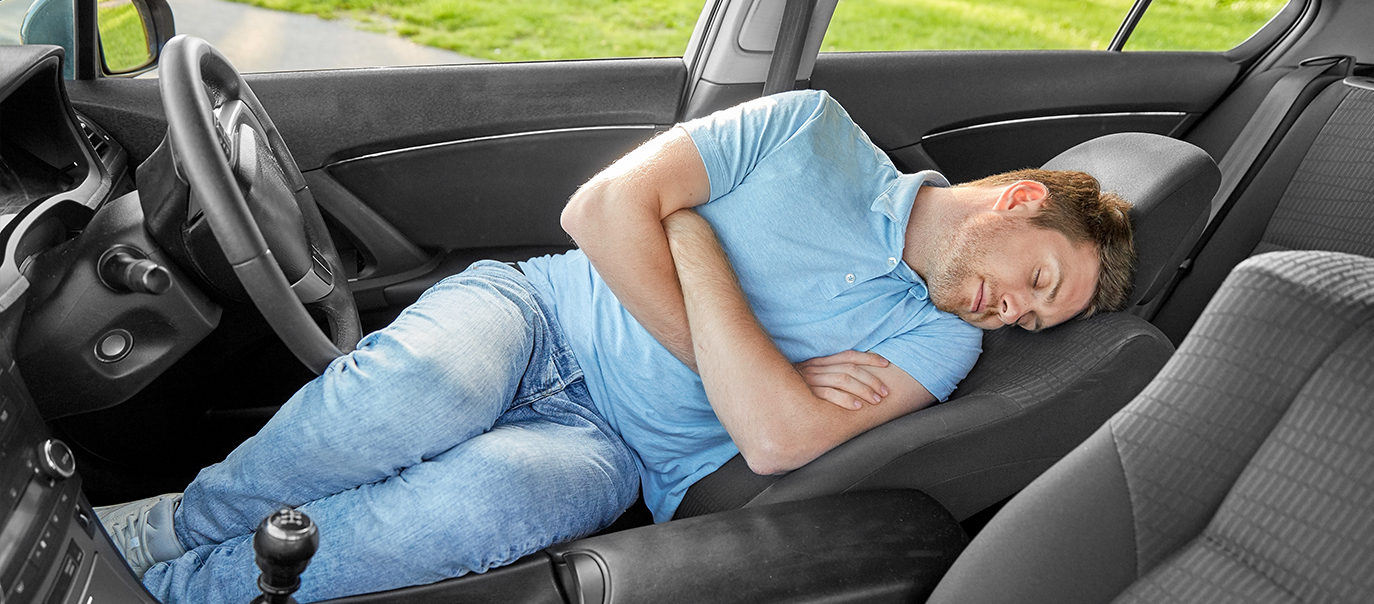
2. Fatigue
Crash risk increases significantly at night, particularly for young drivers.
Sleep deprivation slows reaction time, reduces vigilance and impairs decision-making. Young male drivers are disproportionately involved in fatigue-related collisions.
The fatigue scenario uses light-hearted humour on the surface, but the underlying message is serious.
The contrast makes it memorable and reinforces the risk without lecturing.

3. Seatbelts
In 2022, four unbelted young people were killed or seriously injured every week.
Young men are especially likely to wear seatbelts inconsistently, particularly on short or familiar journeys.
This clip uses crash dummies and humour to illustrate the force of impact, linked to being hit by a charging rhino.
It’s playful in tone, but the physics are real and the impact is hard to forget.

4. Speeding
Speeding remains a major contributor to young driver fatalities. Inexperience makes it harder to judge safe speeds, especially on bends and at junctions.
Excess speed increases both stopping distance and crash severity, and many young driver crashes involve loss of control.
For me, this was probably the most impactful scenario.
Seeing a passenger being thrown around the back seat, desperately holding on, and finally asking, “Can you watch your speed a bit please?” captures a moment most people have lived through, but rarely talk about.

5. Mobile Phones
Young drivers are more likely to use mobile phones while driving.
Texting or phone use increases crash risk by at least four times, impairing lane control, reaction time, and situational awareness.
One of the strongest messages here is practical and immediate. If a driver accumulates six penalty points within their first two years, they lose their licence.
It’s a consequence many young drivers underestimate, until it’s spelled out clearly.

Passion Behind the Camera
Kate and Matthew also shared a behind-the-scenes video from the two-day shoot, offering insight into the process of filming the mini scenarios.
What came through strongly was the team’s passion, creativity, and genuine care for getting this right.
The actors, crew, and creators weren’t just producing content, they were thinking deeply about how young people experience risk, pressure, and decision-making behind the wheel.

Evaluation From the Start
A recurring theme across the ICE Live webinar was evaluation.
5 in 5 was no exception. Kate and Matthew confirmed that Ian Edwards MSc has been commissioned to carry out a full evaluation of the intervention.
This evaluation will measure:
- Participant reaction
- Learning and understanding
- Willingness to change behaviour
By embedding evaluation from the outset, the team is ensuring that 5 in 5 isn’t just engaging, but effective.

Thoughts
5 in 5 represents a mature evolution in young driver education.
It recognises that realism doesn’t need to mean trauma and that brevity, empathy, and relatability can be more powerful than shock.
In a space where well-intentioned interventions have sometimes missed the mark, This feels like a thoughtful, evidence-informed step in the right direction. It has real potential to influence how young drivers understand risk during the most dangerous years of their driving lives.

Wrap-Around Education
Virtual Reality has an incredible ability to immerse us. It can place us in situations we may never otherwise experience, evoke strong emotional responses, and make risks feel real.
But as Dr Jonathan Rolison explained during the closing session of the ICE Live webinar, VR on its own is not learning. Without the right educational framework around it, VR risks becoming little more than shock, novelty, or entertainment.
This is where wrap-around education comes in.
Wrap-around education transforms a VR experience into a meaningful learning intervention. It ensures that what the learner feels and sees is translated into understanding, safer decision-making, and real-world behavioural change.

The Risk of ‘Headset-Only’ Learning
When VR experiences are delivered without preparation or follow-up, learners often take away the wrong messages.
Research into experiential and emotional learning shows that strong emotions can either deepen learning or completely derail it, depending on how they are guided.
Without wrap-around education, learners may:
Focus on the wrong moments
They may remember the most dramatic or shocking scene rather than the key learning objective.
Leave with false confidence
For example, believing “I’d handle that better” instead of recognising how quickly situations escalate.
Blame individuals instead of systems
Learners might judge the characters’ behaviour rather than understanding environmental, social, or systemic risks.
Remember the shock, not the lesson
Shock can trigger a coping response where the brain distances itself from the content rather than engaging with it.
In short, VR without facilitation can feel powerful but still fail to change behaviour.
Charli Howe, ADINJC General Council
Charli Howe, ADINJC General Council

Introduction
One of the standout sessions at ICE Live 2026 was the Workshop on Evaluation for Intervention, delivered by Ian Edwards MSc.
It was a thoughtful, grounded, and at times challenging exploration of what it really means to evaluate virtual reality (VR) and other safety interventions.
This is especially true in road safety, where good intentions don’t always lead to good outcomes.

What Do We Mean by “Evaluation”?
Ian offered a refreshingly direct definition:
“Evaluation is a process that produces objective evidence of the outcome of an intervention.”
The key word here is objective.
Ian framed evaluation as a question:
Is there sufficient evidence to stand up in a court of law?
If the answer is no, then regardless of how convincing or innovative an intervention feels, it cannot be justified.
As Ian put it:
“If you can’t objectively demonstrate that something works, you may be wasting money and worse, you could be making the problem bigger.”

When Interventions Backfire
To underline this point, Ian shared an example from a review of novice driver skid-control programmes. These interventions were designed to improve vehicle handling and reduce crashes.
Instead, the evaluation revealed the opposite effect.
The programmes:
- Encouraged drivers to underestimate danger
- Increased driver confidence without increasing judgement
- Led to higher speeds and increased collision rates
This is a well-documented phenomenon in road safety known as risk compensation. When people feel more skilled or protected, they may take greater risks.
Without evaluation, these unintended consequences would have remained invisible.

The Kirkpatrick Model: A Practical Framework
A significant part of the session focused on the Kirkpatrick Model (1959), a four-level framework widely used to evaluate training and interventions.
Ian highlighted its particular value for practitioners because it forces clarity about what is being measured and why.
Together, the four levels provide a structured way to assess impact.

Level 1: Reaction
This is the most basic and easiest level of evaluation.
- Did participants enjoy it?
- Was it engaging or immersive?
- Did they find it useful or thought-provoking?
- Would they recommend it?
Reaction data is helpful, but on its own it tells us very little about effectiveness.

Level 2: Learning
This level asks whether learning has actually occurred.
- Has understanding changed?
- Has knowledge increased?
- What new insights have participants gained?
Ian shared post-VR headset data showing clear increases in knowledge and understanding after participants experienced the VR content.
This is encouraging but still not enough.

Level 3: Behaviour
This is where many interventions falter. Learning does not automatically translate into behaviour change.
Ian used smoking as a simple example: most smokers understand the risks extremely well, yet behaviour persists.
Behaviour change:
- Is influenced by habit, context, incentives, and social norms
- Requires more than information alone
In the VR evaluation data, behavioural intention scores did increase, but not as strongly as learning outcomes, a pattern commonly seen across safety education.

Level 4: Results
The final and most important level asks:
- Did the intervention succeed?
- Were the outcomes what we expected?
- Did it reduce harm, risk, or negative outcomes?
This is also the hardest level to measure, as it often requires long-term data, comparison groups, and careful control of confounding factors.
Together, these four levels form the backbone of a robust evaluation.

Designing Evaluation the Right Way Round
A key theme running through Ian’s session was that evaluation must be designed before the intervention, not retrofitted afterwards.
The evaluation process should include:
What needs to be measured
- Choose an intervention that fits your objective, not the other way around
- Be clear on what success looks like and understand the entire intervention, not just the VR element
Evaluation design
- Decide early how outcomes will be assessed and compared
Data requirements
- Quantitative data (scores, measures, rates)
- Qualitative data (feedback, perceptions, lived experience)
Measures
Ensure measures are:
- Reliable
- Valid
- Capable of detecting improvement
Sampling
Effect size matters.
- Small effects require large samples
- Larger effects can be detected with smaller samples, but with higher risk of error
- As a rough guide, Ian suggested a minimum sample size of around 100 participants
Data analysis and reporting
- Results should be published where possible so others can scrutinise and learn from them
- In road safety, the Road Safety GB Knowledge Centre is a strong platform for sharing findings

Ethics and Legal Considerations
Evaluation isn’t just technical, It’s ethical.
Ian emphasised the importance of:
- Informed consent
- Minimising harm to participants
- The right to withdraw data
- Confidentiality and data protection
- Professional competence
- Openness and honesty in reporting results
These considerations are especially important when immersive technologies like VR are involved, where emotional and physical responses can be stronger than traditional training methods.

Practical Tools for Practitioners
For those looking to put this into practice, there is an interactive evaluation methods document available via the National Fire Chiefs Council (NFCC).
It provides structured guidance on evaluation design and is a genuinely useful resource for anyone working with interventions, not just VR.
You can find it here.

Final Thoughts
This workshop was a timely reminder that innovation alone does not equal impact.
VR can be immersive, engaging, and powerful but without rigorous evaluation, we simply don’t know whether it is helping, doing nothing, or quietly making things worse.
As Ian Edwards demonstrated so clearly, good evaluation isn’t about proving we’re right. It’s about making sure we’re not wrong and that’s a responsibility no safety practitioner can afford to ignore.
Charli Howe, ADINJC General Council

Introduction
In 2024, James Evans delivered an excellent and timely presentation on GIG Ride Smarter. This virtual reality-based risk reduction education programme is designed specifically for powered two-wheelers operating in the gig economy.
The programme represents a fully planned safety intervention led by Dr Elizabeth Box. It responds directly to a group of road users who are consistently over-represented in crash and injury data, yet chronically under-supported by traditional safety systems.

Why Focus on Gig-Economy Riders
Young male riders, often under the age of 30, are statistically more likely to be involved in serious motorcycle crashes.
Across multiple countries, males account for around 75% to 90% of powered two-wheeler fatalities, with younger riders disproportionately represented.
When this demographic overlaps with gig economy delivery work, the risk profile intensifies.
Gig riders typically experience:
- Elevated exposure: Long hours on the road, often during peak traffic periods
- Multi-apping: Working across several platforms simultaneously to maximise income
- Fatigue and time pressure: Tight delivery windows that directly incentivise speed
- Urban density: High interaction with vulnerable road users, junctions, and complex traffic environments
Research consistently shows that fatigue, time pressure, and divided attention significantly increase crash risk.
For gig riders, these are not occasional hazards, they are structural features of the job.

Risk is Normalised by the System
Risk-taking behaviours such as speeding, running red lights and mobile phone use are widely reported among delivery riders.
Crucially, these behaviours are not just tolerated. They are often implicitly rewarded.
Algorithmic management plays a major role. Delivery platforms rely on metrics such as acceptance rates, delivery times and customer ratings.
Riders report a constant fear of losing work or being de-prioritised by the algorithm. This can normalise unsafe behaviour in the name of efficiency.
Many riders describe feeling:
- Easily replaceable
- Weakly protected
- Rarely challenged or even discouraged when taking risks
Traditional occupational health and safety frameworks are largely absent in this space.
Gig riders are typically classified as independent contractors, placing them outside standard employer-led risk management systems.
Even enforcement presents challenges. Compulsory Basic Training (CBT), for example, was never designed for commercial delivery riding, and monitoring compliance within a fragmented gig workforce is extremely difficult.

Why Virtual Reality?
This is where GIG Ride Smarter takes a different approach.
There is growing evidence that education-based interventions, when well designed, can positively influence rider behaviour. This is particularly true when they focus on hazard perception, self-reflection and decision-making rather than punishment alone.
VR offers a unique advantage here.
Using VR, riders can be exposed to dangerous scenarios:
- Immersively
- In a controlled environment
- With minimal physical risk
They can experience near misses, distractions, poor decisions, and their consequences without being harmed.
On its own, VR education is unlikely to produce long-term change. However, when combined with other interventions; policy, enforcement, platform engagement, and cultural shifts, it can become a powerful tool.

From Theory to the Roadside
One of the most compelling elements of the programme is that it has moved beyond theory. GIG Ride Smarter has already been rolled out as diversionary education at the roadside by police.
Instead of relying purely on punitive enforcement, riders were offered proactive educational engagement. Early outcomes were overwhelmingly positive in most cases.
This approach aligns closely with Vision Zero principles, acknowledging human error while designing systems that reduce the likelihood and severity of harm.
Early evidence suggests that VR:
- Increases engagement
- Improves recall of safety messages
- Encourages reflection rather than defensiveness
Importantly, it meets riders where they are, both literally and cognitively.

Modular, Targeted, and Scalable
The VR content is topic-specific and designed to be delivered as a short educational series, covering areas such as:
- Hazard perception
- Distraction and mobile phone use
- Road rules
- Personal protective equipment (PPE)
- Motorcycle maintenance
- Fatigue management
Platforms can embed these modules directly into their apps, allowing riders to engage while waiting for deliveries.
The content is concise, accessible, and doesn’t require riders to step away from work for extended periods.
A Personal Take
During the webinar, we were shown one of the VR videos.
I watched it on a large monitor rather than a headset, and even then it was deeply immersive to the point of feeling slightly sick from the 360-degree movement.
That, in itself, speaks to its realism.
What stood out to me the most was that it wasn’t staged or sanitised. It featured real riders, real situations, and real emotions. The opinions felt authentic, and the risks felt immediate.
It didn’t lecture; it invited reflection.

Platform Involvement: Progress and Pushback
Uber Eats currently supports GIG Ride Smarter by providing QR codes on stickers placed on doors and windows, directing riders to the free content.
However, the program is not embedded within rider management panels, largely due to ongoing pushback around platform ‘responsibilities’ and liability.
At present, it has not yet seen widespread adoption by police in this format, and one of the biggest challenges remains getting the content to the right people at the right time.

Worth a Look
If you’re interested in proactive, evidence-informed road safety interventions for vulnerable and under-served road users, GIG Ride Smarter and the broader Vision Zero framework are well worth exploring.
The videos alone are a powerful reminder that safety isn’t just about rules and enforcement, but about systems, incentives, and the very human realities of work on two wheels.
Charli Howe, ADINJC General Council
Introduction
Another standout session at ICE Live came from Rebecca Gill, who took us through the evolving journey of Virtual Reality Therapy.
Crucially, she focused on how we can make VR safe, ethical and effective for everyone, not just the “average” user.

The SPARK Framework
Rebecca’s work recognises a critical truth supported by growing evidence: People experience VR very differently. Factors such as sensory sensitivity, neurodiversity, trauma history, age and physical comfort all shape how immersive technology is perceived and processed.
Without thoughtful design, VR risks excluding the very people it aims to support. To address this, Rebecca introduced SPARK. This is a practical, person-centred framework for delivering VR responsibly.

S – Sensory Exploration
Sensory exploration focuses on understanding what the experience feels like, not just what it shows.
Research suggests that between 20% and 40% of VR users experience some level of cybersickness, including nausea, dizziness or headaches. This is particularly common when motion, visual flow and vestibular cues are misaligned.
Sensory overload can also increase stress, anxiety and disengagement, especially in road safety contexts where environments are already complex and emotionally charged.
Rebecca emphasised the importance of asking learners upfront about:
- Sensory sensitivities
- Triggers such as bright lights, loud or sudden noises
- Physical comfort and tolerance levels
Simple adjustments, such as offering a fidget toy, reducing volume, controlling brightness or slowing movement, can significantly reduce distress.
Creating a low-demand environment and allowing learners to preview what they are about to experience before full immersion supports psychological safety and informed consent.
Accessibility is not an add-on. It is a foundation.

P – Personalised Experiences
Personalisation is one of VR’s greatest strengths and one of its most underused features.
By identifying what an individual needs to feel supported, facilitators can put coping strategies in place before challenges arise.
Evidence from therapeutic and educational VR shows that personalised experiences reduce anxiety, resistance and shutdown. This increases the likelihood of meaningful engagement.
Key principles include:
- Starting where the individual feels comfortable
- Gradually introducing challenge
- Reflecting on experiences and adapting sessions over time
When VR connects to a learner’s personal goals and values, it becomes more relevant and more effective.
Used in this way, VR does not replace an intervention. It strengthens it.

A – Adaptive Engagement
Flexibility is not just good practice, it is a safety feature.
VR sessions should typically last between 5 and 30 minutes, depending on the individual. Longer sessions increase fatigue, sensory overload and discomfort. Studies show that attention and learning quality often decline after prolonged immersion.
Rebecca highlighted an important reminder: behaviour is communication.
Facial expressions, body language, posture and movement all signal how someone is coping.
VR should be designed for nervous systems, not for a generic “user”.
This means:
- Reading the room, not the script
- Responding in real time
- Pausing to check in, reflect and adjust
Conversation, feedback and reflection during and after the experience help relieve stress, restore engagement and consolidate learning.

R – Resilience Building
Resilience is built through choice, not performance.
In road safety education, for example, sitting through a 30-minute VR experience may be overwhelming for some learners. Completing the session isn’t always the right measure of success.
Success might instead look like:
- Observing traffic calmly
- Identifying hazards
- Discussing safer options and decision-making
VR can be especially valuable for learners who struggle with perspective-taking. By safely exploring different viewpoints, individuals can build empathy, awareness and confidence without the real-world risks.

K – Key Moments
One of the clearest messages from the session was this:
“VR without reflection is entertainment”
Empowerment and independence come from guided reflection and feedback.
Identifying key moments within the experience and unpacking them together, is where insight, understanding and behaviour change begin.
Without this step, VR remains a novelty rather than a learning tool.

SPARK in Practice: Safety Essentials
Delivering VR safely requires robust systems and skilled professionals.
Rebecca outlined essential safeguards, including:
- Clear legal responsibility and whistleblowing policies
- Online safety with controlled access throughout sessions
- Age-appropriate use, considering physical and emotional risk factors
- Regular breaks, typically every 15 to 20 minutes
- Formal risk assessments
- A strong focus on emotional wellbeing, supported by trained and experienced staff
- Additional assessments where needed, including medical or individual considerations
Organisations such as the NSPCC and the Child Safety Initiative provide guidance on headset sizing, supervision and safeguarding.

What We Can Start Straight Away
Create a Sensory Checklist
A sensory checklist helps identify risks before they become barriers. It can be quick, simple and highly effective.
Some key areas to feature in your checklist include the following:
Motion and Nausea
Ask about motion sensitivity, previous VR experiences and susceptibility to dizziness. Adjust movement speed, reduce simulated motion or choose static experiences where appropriate.
Comfort and Control
Some learners regulate better with tactile input. Offering options such as a fidget toy, seating choices, or the ability to stand or sit can reduce anxiety and increase focus.
Volume Control
Loud or sudden sounds can be overwhelming. Allow learners to control volume themselves to support autonomy and comfort.
Brightness Control
Bright or high-contrast visuals can trigger headaches or sensory overload. Giving users control over brightness supports comfort and accessibility.
Safety and Autonomy
Learners should always know they can remove the headset immediately. This sense of control significantly reduces anxiety and increases trust.
Build Pause Protocols into Every Session
Pause protocols normalise stopping, checking in and adapting. These can reduce pressure to ‘push through’, support emotional regulation, and encourage greater communication.
Pausing should be framed as a strength, not a failure.

Redefine Success in Your Evaluations
Traditional measures often include:
- Completion rates
- Time spent
- Task performance
These do not always reflect meaningful outcomes.
Success might instead include:
- Increased confidence
- Improved awareness
- Willingness to engage
- Quality of reflection and discussion
Redefining success ensures evaluations reflect human outcomes, not just technical ones.

Key Takeaway
The central message from Rebecca Gill’s session was clear and empowering.
‘VR can be accessible to anyone when it is designed and adapted to complement individual needs.’
Sue Duncan, General Secretary ADINJC
Introduction
After a well-deserved holiday in India, I thought I’d share a light-hearted look at what might be considered the “rules” of driving out there. Let’s just say it was an experience!
The Rules:
1. Officially, driving is on the left.
2. But if it’s quicker to get where you want to go, you can drive against the traffic.
3. On a two-lane road, it’s acceptable to drive three abreast, four if some are tuk tuks. Bikes… as many as fit in the gap.
4. If you want to turn right, just do it. Oncoming traffic will stop if you’re brave enough.
5. On a dual carriageway, drive in the right-hand lane so others can overtake on the left.
6. On other roads, you can overtake on either side wherever there’s space.
7. There’s no such thing as the two-second rule… two millimetres, possibly (How anyone has any door mirrors is a miracle).

8. If you want to park and the kerb’s a bit high – just find a rock to drive over.

9. A motorbike will comfortably hold a family of five (child in front, dad driving, another child, mother sitting sideways holding the baby).

10. It’s a legal requirement to wear a helmet on bikes and scooters. But out of town, no-one does, because they won’t get caught.
11. No children wear helmets, ever.
12. If a policeman tries to stop you for not wearing a helmet, just drive at him and then drive off.

13. Pedestrians crossing the road – be brave, saunter, don’t run, and if a car comes towards you just put your hand up and keep going. (works for them but we didn’t try it!)
14. Sounding horn is obligatory – tuk tuks have it written on their back, as do trucks. There is a code depending on length of hoots, but we never worked it out.

15. There’s no size limit on loads. just pile it as high as you can, whether bike or lorry. Fridges and washing machines can be delivered by push bike towing a cart.

16. If you’re a passenger on a bike and it rains, just put your umbrella up.

17. There are driving schools, poor buggers.
18. Our driver said you need 3 things – good brakes, a good horn and good luck.
Takeaways:
India was a brilliant holiday, and two weeks is not enough!
People will get by the best they can but without rules and an infrastructure to enforce them, people will take risks that to us seem unacceptable.
I loved India, both the place and the people, and I can’t wait to go again!
Sue Duncan
Charli Howe, ADINJC General Council

Introduction
The ICE Live 2026 session opened with Dr Elizabeth Box… and what an opening it was.
In case you are wondering, ICE stands for Immersive Community Education, which is another way of saying virtual reality, or VR as we’ll refer to it from now on.
Her presentation offered a thoughtful, evidence-led exploration of VR:
- What it promises
- What the evidence actually tells us
- How we can use it responsibly in the context of road safety
Rather than positioning VR as a silver bullet, the session challenged us to think critically about how and why we use immersive technology, and how it can genuinely support safer outcomes on our roads.

Why VR Is So Popular and Why That Matters
VR is often described in three powerful ways: immersive, innovative and emotionally powerful.
These qualities explain its rapid uptake in learning and safety contexts.
When done well, VR captures attention, feels realistic and can create memorable experiences. However, as the session highlighted, powerful experiences can also have powerful unintended effects. In some cases, VR can be:
- Overwhelming, where sensory load can crowd out perception and learning
- Distressing, as experiences can feel too real, particularly when users don’t fully process them as simulations
- Fatalistic, reinforcing the idea that crashes or harm are inevitable, which is unhelpful for behavioural change
- Confusing in terms of realism, leaving people feeling they’ve experienced something “real” without clarity on what to do differently
A key reminder from the session: engagement is not the same as effectiveness.

What the Evidence Really Says About VR
Research shows that VR is strong at driving engagement, attention and recall. Learners are often highly focused, and the experience stays with them.
However, when it comes to behaviour change, the evidence is mixed. One of the main challenges is cognitive overload. When emotional intensity and information compete, learning can suffer.
Studies consistently show that VR works best when it is:
- Embedded within a wider learning programme
- Supported by reflection and facilitation
- Treated as part of an intervention, not the intervention
In other words, VR is most effective when it is designed as part of a learning system rather than a standalone experience.

When VR Works Best
Evidence suggests that VR is particularly effective when it supports learning through experience, such as:
- Skill rehearsal
- Hazard perception, with low-risk consequences
- Perspective-taking, used carefully to build empathy and awareness without causing unnecessary distress
Strong outcomes are more likely when learners receive some pre-training, get immediate feedback, and when VR sessions are used consistently rather than as a one-off novelty.
Importantly, VR works best for “how to act”, not “what to believe”. It does not replace reinforcement, moral messaging or broader behaviour-change strategies, but it can meaningfully support them.
As one of the key takeaways made clear:
- VR isn’t ineffective… it’s just not sufficient on its own.

The Right Questions to Ask Before Commissioning VR
To avoid VR becoming a costly novelty, the session emphasised the importance of asking the right questions upfront:
- What problem are we trying to solve?
- What behaviour or skill needs to change?
- How will VR sit alongside other activities or interventions?
- What happens when the headset comes off?
- How will we know if it worked?
These questions help ensure VR is used deliberately, ethically and proportionately.

Supporting Evidence-Led VR Design
This is where tools like Co-Pilot can play an important role.
Co-Pilot supports evidence-led VR design and evaluation, helping organisations make informed decisions rather than starting from scratch. Its research library brings together existing evidence, saving time and supporting more robust programme design.
Similarly, the Vision Zero Toolbox focuses on both design and evaluation, helping practitioners assess where VR may add value and where it may not. This balanced approach supports safer, more effective interventions aligned with long-term road safety goals.
Challenge pieces also play a vital role. By questioning assumptions and emotional responses, they help keep decision-making evidence-led rather than emotion-led. This reinforces the need for thoughtful design, rigorous evaluation and continued development.

Key Takeaways
- VR is powerful when used deliberately
- Design and content matter more than novelty
- Evidence and evaluation protect impact
- VR works best as part of a broader learning system
Ultimately, this session wasn’t about being for or against VR. It was about staying on track using immersive technology ethically, proportionately and responsibly, in support of the shared road safety outcomes we are all working towards.
When guided by evidence and thoughtful planning, VR can be a valuable tool. Not the whole solution, but a meaningful part of it.