
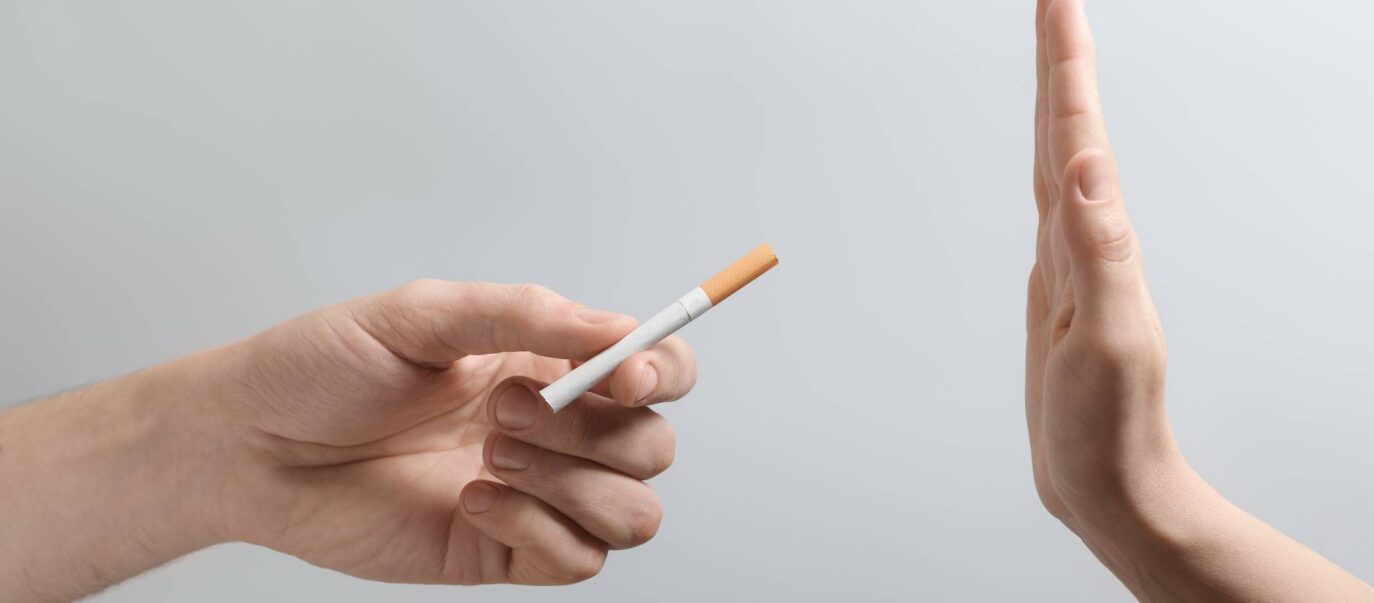
October is here, which means it’s Stoptober, the annual campaign encouraging smokers to put down the cigarettes and give quitting a go.
And if you’re a driving instructor, there’s another reason this is worth thinking about.
When you spend your working day sitting shoulder-to-shoulder with learners in a relatively small space, what’s on you, in the air and in your car matters.
You might not smoke during lessons, but what about between them?
Peppermint gum, a quick spray of air freshener or having the windows down might help with the smell, but your learner may still notice that you’ve been smoking.
And it isn’t just about whether the smell is pleasant or unpleasant.
Smoking and Your Learning Environment
Second-hand smoke contains thousands of irritants, toxins and cancer-causing substances. The NHS warns that regular exposure can increase the risk of serious illnesses, including lung cancer and heart disease.
Even when you smoke outside, chemicals from cigarette smoke can remain on your clothing and affect the
people around you.
For a driving instructor, that deserves some thought.
Your car isn’t just your office. For your learner, it is their classroom, somewhere they may spend one or two hours each week while trying to concentrate, manage their nerves, make decisions and build confidence behind the wheel.
What If Your Learner Has Just Quit Smoking?
Perhaps they’ve finally done it.
They’ve made the decision, dealt with the cravings and are trying to change a habit they’ve had for years.
Then they get into your car and see a packet of cigarettes sitting in the door pocket. Or they smell smoke on your jacket. Perhaps they see you light up as soon as the lesson finishes.
It is worth considering the effect this could have on someone who is trying to quit.
Nicotine withdrawal can cause symptoms including irritability, restlessness and difficulty concentrating, particularly during the first few days and weeks after quitting.
Those aren’t particularly helpful when someone is also trying to concentrate on learning a new skill behind the wheel.

What Happens When You Stop Smoking?
We all know smoking damages your health, but the benefits of stopping can begin surprisingly quickly.
According to the NHS:
- After around 20 minutes, your pulse rate starts returning to normal.
- After 8 hours, the carbon monoxide level in your blood has reduced by half.
- After 48 hours, carbon monoxide levels have dropped to that of a non-smoker, while your senses of taste and smell begin to improve.
- After 3 to 9 months, coughing, wheezing and breathing problems can improve as lung function increases.
- After one year, your risk of a heart attack is around half that of someone who continues to smoke.
So perhaps Stoptober isn’t only about giving something up. It could be about getting something back.
More breath. More energy. Better health. More money.
And potentially more years doing the things you enjoy, including helping the next generation of drivers.
What About Instructors Who Don’t Smoke?
You might be thinking, “Well, this doesn’t really apply to me.”
But perhaps someone close to you smokes.
You don’t have to smoke yourself to be affected by cigarette smoke. Regular exposure to second-hand smoke can increase the risk of serious health problems, including lung cancer and heart disease.
Stoptober can therefore also be an opportunity to support somebody else who is trying to quit.

Could This October Be the Time to Quit?
There is good reason to aim for 28 smoke-free days. The NHS says that once you reach 28 days without smoking, you are five times more likely to stay smoke-free for good.
You don’t have to do it alone either. Local Stop Smoking Services provide free, expert and personalised support, and professional support can significantly improve your chances of quitting successfully.
So, whether you smoke yourself, are supporting somebody who does, or simply want to create a healthier environment for your learners, October could be a good time to make a change.
You teach people how to make better decisions on the road every day.
Maybe this month, it’s time to make one for yourself.
Find out more about quitting smoking and the support available through the NHS:
https://www.nhs.uk/better-health/quit-smoking/
Charli Hodgson
ADINJC Governing Committee Member



Categories
Recent Posts
Get In Touch
Create a free acccount or login
To continue reading this information, you need a free account that can be created in under a minute. Join today or login
Like to be kept informed?
Our free Lite membership delivers newsflashes and weekly roundups directly to your inbox, so you never miss a beat. Or become a Premium member to enjoy the wide-ranging support & benefits we offer.
Report
There was a problem reporting this post.
Block Member?
Please confirm you want to block this member.
You will no longer be able to:
- See blocked member's posts
- Mention this member in posts
Please allow a few minutes for this process to complete.
Share This: