ICE Live 2026: A Two-Wheeled Take on VR

February 24th, 2026
Charli Howe, ADINJC General Council

Introduction
In 2024, James Evans delivered an excellent and timely presentation on GIG Ride Smarter. This virtual reality-based risk reduction education programme is designed specifically for powered two-wheelers operating in the gig economy.
The programme represents a fully planned safety intervention led by Dr Elizabeth Box. It responds directly to a group of road users who are consistently over-represented in crash and injury data, yet chronically under-supported by traditional safety systems.
Why Focus on Gig-Economy Riders
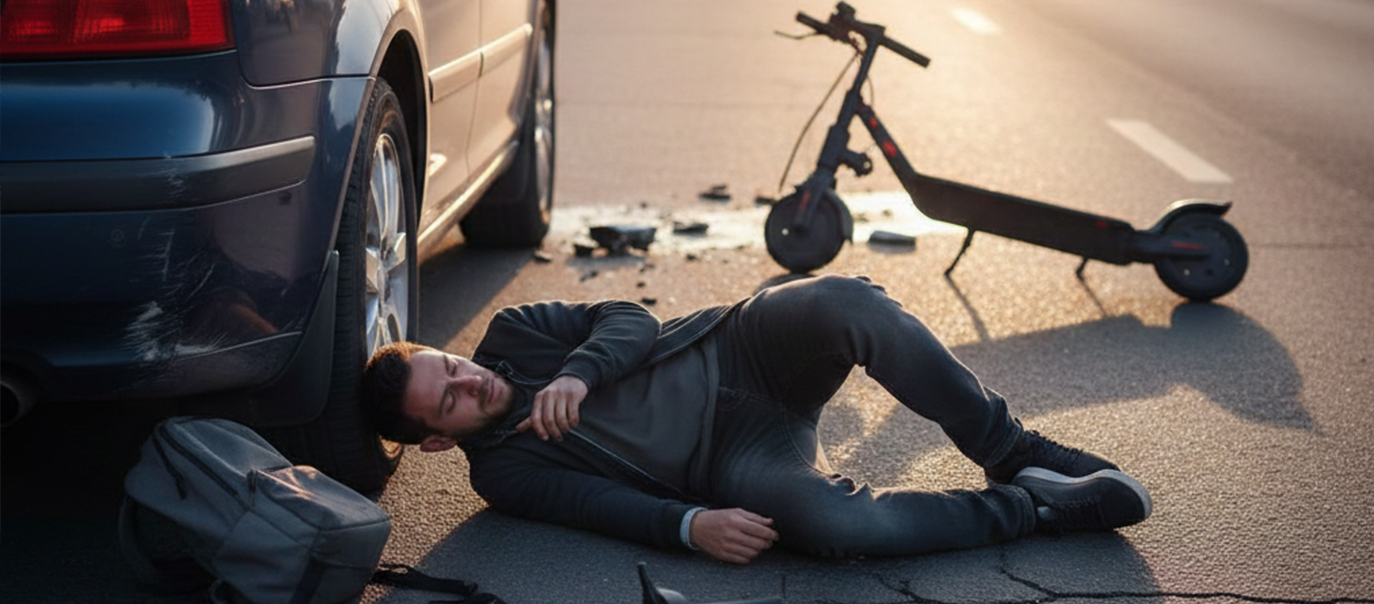
Young male riders, often under the age of 30, are statistically more likely to be involved in serious motorcycle crashes.
Across multiple countries, males account for around 75% to 90% of powered two-wheeler fatalities, with younger riders disproportionately represented.
When this demographic overlaps with gig economy delivery work, the risk profile intensifies.
Gig riders typically experience:
- Elevated exposure: Long hours on the road, often during peak traffic periods
- Multi-apping: Working across several platforms simultaneously to maximise income
- Fatigue and time pressure: Tight delivery windows that directly incentivise speed
- Urban density: High interaction with vulnerable road users, junctions, and complex traffic environments
Research consistently shows that fatigue, time pressure, and divided attention significantly increase crash risk.
For gig riders, these are not occasional hazards, they are structural features of the job.

Risk is Normalised by the System
Risk-taking behaviours such as speeding, running red lights and mobile phone use are widely reported among delivery riders.
Crucially, these behaviours are not just tolerated. They are often implicitly rewarded.
Algorithmic management plays a major role. Delivery platforms rely on metrics such as acceptance rates, delivery times and customer ratings.
Riders report a constant fear of losing work or being de-prioritised by the algorithm. This can normalise unsafe behaviour in the name of efficiency.
Many riders describe feeling:
- Easily replaceable
- Weakly protected
- Rarely challenged or even discouraged when taking risks
Traditional occupational health and safety frameworks are largely absent in this space.
Gig riders are typically classified as independent contractors, placing them outside standard employer-led risk management systems.
Even enforcement presents challenges. Compulsory Basic Training (CBT), for example, was never designed for commercial delivery riding, and monitoring compliance within a fragmented gig workforce is extremely difficult.

Why Virtual Reality?
This is where GIG Ride Smarter takes a different approach.
There is growing evidence that education-based interventions, when well designed, can positively influence rider behaviour. This is particularly true when they focus on hazard perception, self-reflection and decision-making rather than punishment alone.
VR offers a unique advantage here.
Using VR, riders can be exposed to dangerous scenarios:
- Immersively
- In a controlled environment
- With minimal physical risk
They can experience near misses, distractions, poor decisions, and their consequences without being harmed.
On its own, VR education is unlikely to produce long-term change. However, when combined with other interventions; policy, enforcement, platform engagement, and cultural shifts, it can become a powerful tool.

From Theory to the Roadside
One of the most compelling elements of the programme is that it has moved beyond theory. GIG Ride Smarter has already been rolled out as diversionary education at the roadside by police.
Instead of relying purely on punitive enforcement, riders were offered proactive educational engagement. Early outcomes were overwhelmingly positive in most cases.
This approach aligns closely with Vision Zero principles, acknowledging human error while designing systems that reduce the likelihood and severity of harm.
Early evidence suggests that VR:
- Increases engagement
- Improves recall of safety messages
- Encourages reflection rather than defensiveness
Importantly, it meets riders where they are, both literally and cognitively.

Modular, Targeted, and Scalable
The VR content is topic-specific and designed to be delivered as a short educational series, covering areas such as:
- Hazard perception
- Distraction and mobile phone use
- Road rules
- Personal protective equipment (PPE)
- Motorcycle maintenance
- Fatigue management
Platforms can embed these modules directly into their apps, allowing riders to engage while waiting for deliveries.
The content is concise, accessible, and doesn’t require riders to step away from work for extended periods.
A Personal Take
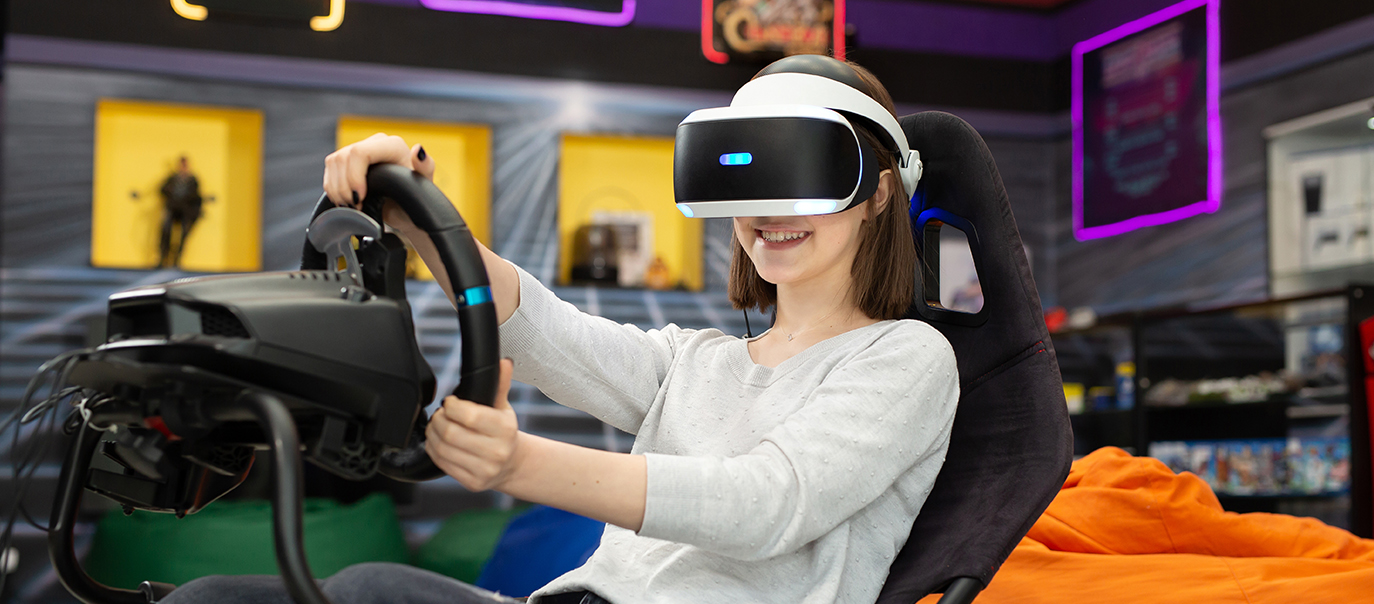
During the webinar, we were shown one of the VR videos.
I watched it on a large monitor rather than a headset, and even then it was deeply immersive to the point of feeling slightly sick from the 360-degree movement.
That, in itself, speaks to its realism.
What stood out to me the most was that it wasn’t staged or sanitised. It featured real riders, real situations, and real emotions. The opinions felt authentic, and the risks felt immediate.
It didn’t lecture; it invited reflection.

Platform Involvement: Progress and Pushback
Uber Eats currently supports GIG Ride Smarter by providing QR codes on stickers placed on doors and windows, directing riders to the free content.
However, the program is not embedded within rider management panels, largely due to ongoing pushback around platform ‘responsibilities’ and liability.
At present, it has not yet seen widespread adoption by police in this format, and one of the biggest challenges remains getting the content to the right people at the right time.
Worth a Look
If you’re interested in proactive, evidence-informed road safety interventions for vulnerable and under-served road users, GIG Ride Smarter and the broader Vision Zero framework are well worth exploring.
The videos alone are a powerful reminder that safety isn’t just about rules and enforcement, but about systems, incentives, and the very human realities of work on two wheels.



Categories
Recent Posts
Get In Touch
Create a free acccount or login
To continue reading this information, you need a free account that can be created in under a minute. Join today or login
Like to be kept informed?
Our free Lite membership delivers newsflashes and weekly roundups directly to your inbox, so you never miss a beat. Or become a Premium member to enjoy the wide-ranging support & benefits we offer.
Report
There was a problem reporting this post.
Block Member?
Please confirm you want to block this member.
You will no longer be able to:
- See blocked member's posts
- Mention this member in posts
Please allow a few minutes for this process to complete.
12 responses to “ICE Live 2026: A Two-Wheeled Take on VR”
sildenafil dose‑based pricing
sildenafil dose‑based pricing
minoxidil distribution data
minoxidil distribution data
minoxidil moa
minoxidil moa
ivermectin treatment questions
ivermectin treatment questions
toradol migraine treatment info
toradol migraine treatment info
levitra vs tadalafil
levitra vs tadalafil
finns semaglutid naturligt
finns semaglutid naturligt
what is semaglutide for weight loss
what is semaglutide for weight loss
furosemide 20 mg tablet for dogs
furosemide 20 mg tablet for dogs
dexlansoprazole cap 60mg generic
dexlansoprazole cap 60mg generic
lasix medication
lasix medication
prescription antibiotics
prescription antibiotics