

We have all fallen into the allure of the velvety vixen at some point in our lives.
The smoothness and chocolatey goodness tickling our taste buds.
How many times have you had that argument with yourself about whether to eat that chocolate bar or not? Whether to have that extra piece now that the packet is open?
Have you rationalised that you’ll get “back on the wagon” tomorrow, so you end up eating the lot?
Felt guilty after eating it?
Well… what would you think if I told you that chocolate wasn’t entirely bad for you? And that you could enjoy it as part of your diet, guilt-free!
So, there are a few options here – and a few facts, of course.
White, milk or dark chocolate?
Let’s start with the less beneficial chocolate.
White chocolate
White chocolate has very few of the potential health benefits associated with cocoa, as it doesn’t contain any cocoa solids.
It does not typically contain much caffeine, and it contains calcium from its milk content.
Milk chocolate
Milk chocolate contains more cocoa solids than white chocolate, but the potential benefits may be outweighed by the sugar and calorie content of many chocolate bars.
It also contains compounds associated with pleasure and reward – I wonder if this is where the term “comfort eating” comes from?!
Milk chocolate also contains some antioxidants, although generally at much lower levels than dark chocolate.
That means it’s still something to enjoy in moderation, but a little can absolutely form part of a balanced diet without feeling completely guilty about it.
Dark chocolate
Whilst dark chocolate is not always at the top of everyone’s “must buy” list, it is generally the better option if you’re going to reach for the treat cupboard.
Dark chocolate contains plant compounds called flavanols, which have been studied for their potential effects on blood-vessel function and cardiovascular health.
It can be a great addition to porridge, natural yoghurt, or simply enjoyed on its own with a hot drink.
Generally, chocolate with a higher percentage of cocoa solids is likely to contain more flavanols and less sugar, although this can vary between products.
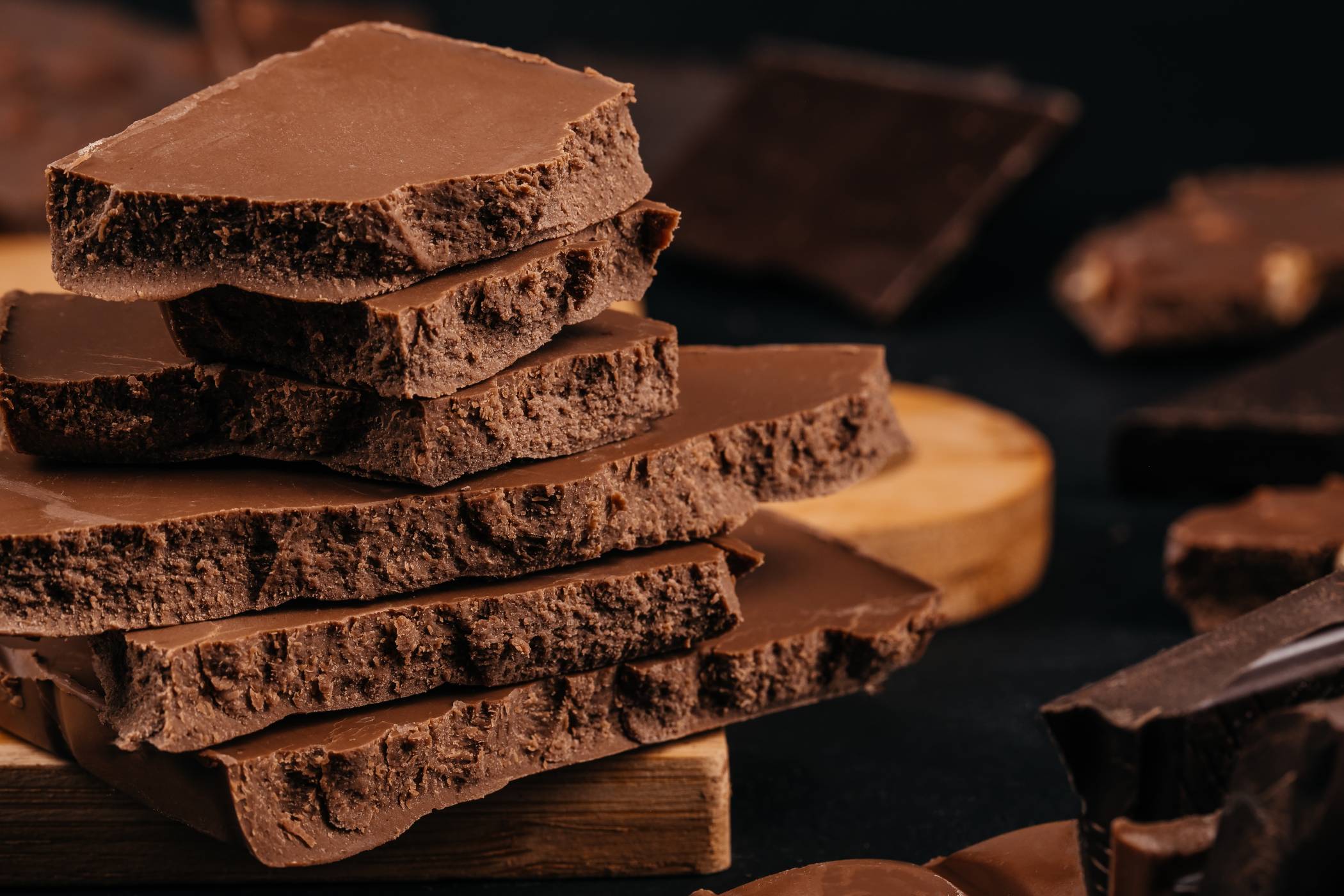
What are the potential benefits of dark chocolate?
The benefits often associated with cocoa and dark chocolate include:
Heart health:
Cocoa flavanols may help support the production of nitric oxide, which helps blood vessels relax and can support healthy blood flow. Research suggests flavanols may have a modest effect on blood pressure, although the amount found in individual chocolate products varies considerably.
Brain function:
Research into cocoa flavanols has also explored their potential relationship with blood flow and cognitive function.
Antioxidant properties:
Dark chocolate contains polyphenols, including flavanols, which have antioxidant properties.
Mood:
And then there’s the mood factor. Chocolate is associated with pleasure and reward, although the relationship between chocolate and mood is considerably more complicated than simply saying “chocolate makes you happy”!
Although dark chocolate comes out strongest when comparing cocoa content and flavanols, it is still high in fat and calories, so it should be enjoyed in moderation.
What about sugar-free chocolate?
There are alternatives to conventional chocolate, such as sugar-free chocolate.
But don’t automatically assume this makes it healthier than ordinary chocolate. Although reducing sugar may be better for your teeth, the fat and calorie content can still be similar depending on the product.
Sugar-free doesn’t automatically mean healthier either. Some products replace sugar with sweeteners such as polyols, which can cause bloating, gas or a laxative effect when consumed in larger amounts.
Choosing your chocolate
If you’re looking for good-quality chocolate, consider choosing a bar with a higher cocoa content and a relatively simple ingredient list.
The original recommendation here was to look for organic, ethically sourced Fairtrade cocoa with minimal additives, with Green & Black’s given as an example.
Green & Black’s offers dark chocolate with a range of cocoa percentages to suit different tastes.
Cacao nibs are another option. They’re essentially crushed pieces of roasted cacao beans and can be added to coffee or porridge to make everyday snacks and drinks a little more jazzy.
Baking with dark chocolate instead of milk chocolate can also work well, as the bitterness often complements and cuts through the sweetness of a cookie or cake.
A final fact to take away
And finally, a fact which gives me the rationale that we SHOULD have chocolate in our lives:
The scientific name for the cacao tree is Theobroma cacao. The name Theobroma comes from Greek and is commonly translated as “food of the gods”.
Chocolate isn’t a “health food”, but it doesn’t need to be treated as a forbidden food either!
Charli Hodgson
ADINJC Governing Committee Member



Categories
Recent Posts
Get In Touch
Create a free acccount or login
To continue reading this information, you need a free account that can be created in under a minute. Join today or login
Like to be kept informed?
Our free Lite membership delivers newsflashes and weekly roundups directly to your inbox, so you never miss a beat. Or become a Premium member to enjoy the wide-ranging support & benefits we offer.
Report
There was a problem reporting this post.
Block Member?
Please confirm you want to block this member.
You will no longer be able to:
- See blocked member's posts
- Mention this member in posts
Please allow a few minutes for this process to complete.
Share This: