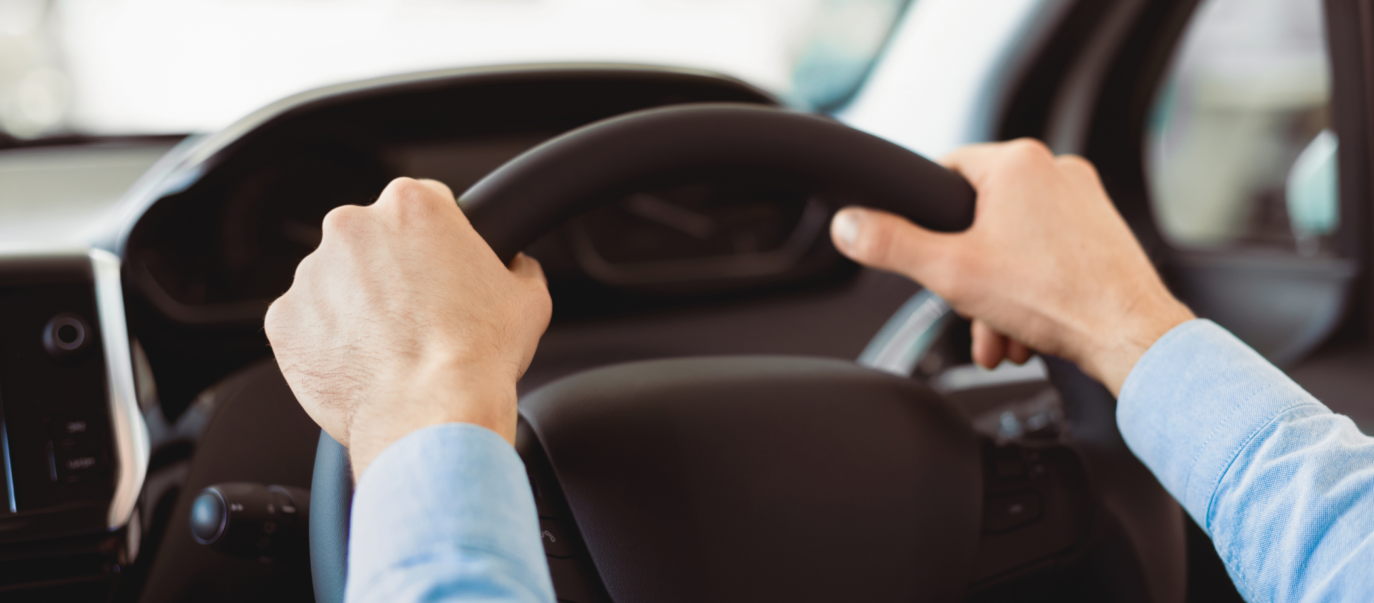
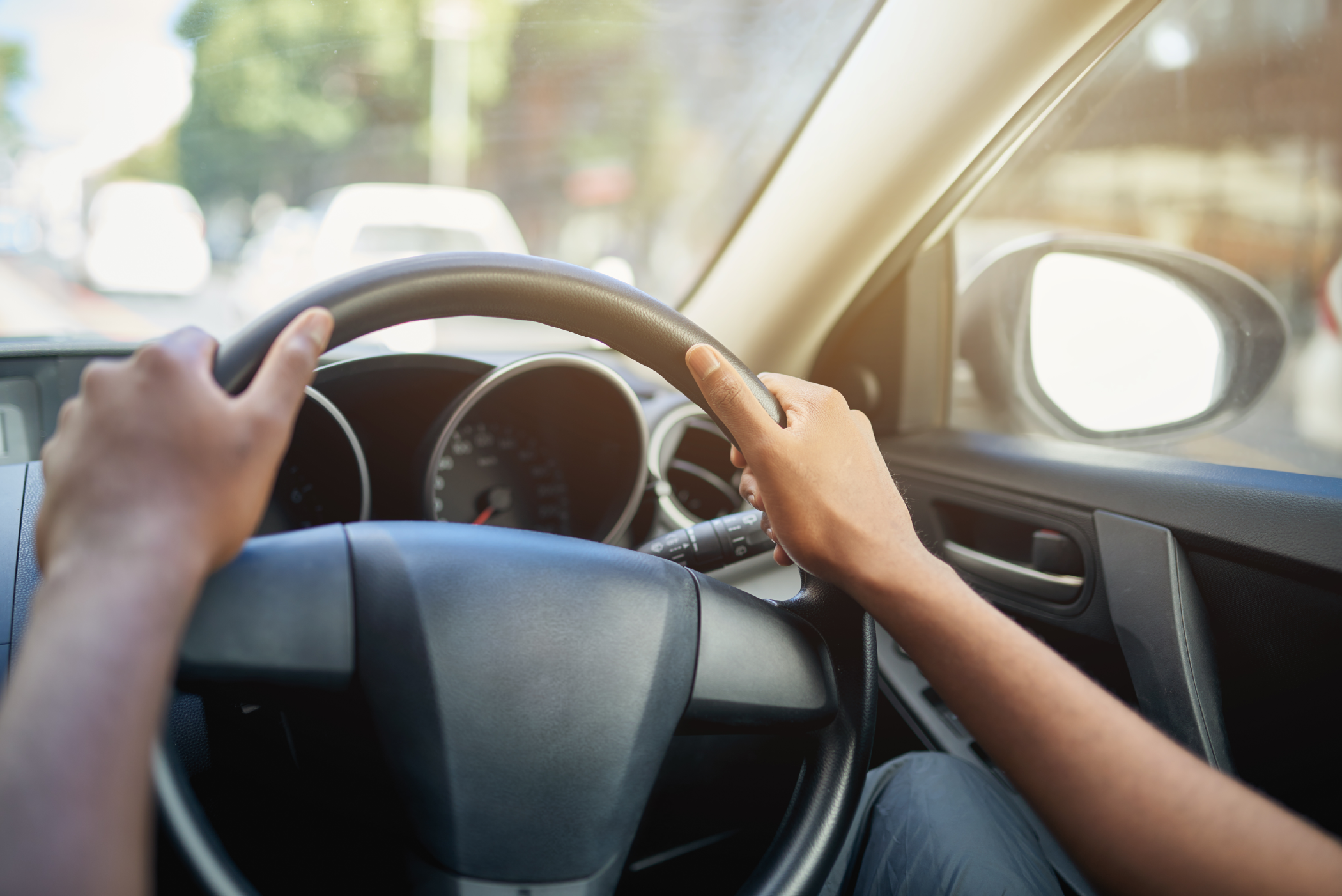
Steering seems to be one of those subjects that divides driving instructors.

At one end, you’ll still hear “10-to-2, pull-push, every single time.”

At the other, I see an increasingly relaxed attitude of “I don’t care how you steer as long as you’re in control.” Sometimes that even extends to encouraging the laid-back, one-handed approach because it looks a bit more natural or ‘cool’.

I probably sit somewhere between the two, although definitely closer to the pull-push end.

Good steering starts before the car moves

Of course, good steering starts before the car moves. A sensible seating position, with enough bend in the arms to operate the wheel comfortably, makes smooth and controlled steering much easier.

The DVSA doesn’t prescribe one particular steering technique. What matters is being able to steer accurately, smoothly and safely while maintaining proper control of the vehicle.

So no, using something other than pull-push doesn’t automatically make somebody an unsafe driver.

But I think there’s a danger in jumping from that to “technique doesn’t matter at all.” In my opinion, it very much does.

Why I still encourage a two-handed pull-push technique

Personally, I still encourage learners to develop a good two-handed pull-push technique. Not because I want everyone shuffling the wheel around like they’re taking a driving test in 1987, but because it’s a really effective way of maintaining control.

A good steering technique isn’t valuable because it looks good. It’s valuable because it gives you an organised, reliable way of controlling the vehicle.

One of the things I particularly like about a good two-handed technique is that it leaves you with options. If the situation changes halfway through a turn, you still have a useful hand position and the ability to add or remove steering smoothly. It allows larger amounts of steering to be applied progressively when needed and lends itself to smooth, measured inputs rather than suddenly throwing the wheel at a corner.

Steering technique shouldn’t restrict you; it should give you more capacity to respond.

Smooth, progressive steering

Good hand positioning isn’t just about where your hands are. It’s about how you introduce steering into the car.

Apply the steering progressively as you enter a bend and progressively remove it as the road opens again. Smooth hands help keep the car balanced and settled.

There are absolutely times when another technique is perfectly appropriate. A gentle bend might require only a small movement of the wheel, with no need to reposition the hands at all. I’m certainly not going to insist on an elaborate pull-push movement just for the sake of demonstrating a technique.

But equally, I don’t subscribe to “steer however you want.”

And I’m definitely not going to encourage poor one-handed steering just because it makes me look like the cool uncle in the passenger seat.

Develop a sound technique first

Our job isn’t to make driving techniques look good. It’s to help people develop methods that remain effective when the situation becomes more demanding, or they suddenly need more steering than they expected.

So perhaps the ideal advice isn’t:

“You must always steer like this” or “It doesn’t matter how you steer.”

It’s something like;

“Develop a sound technique first. Then learn when and how to adapt it.”

For me, two hands and a good pull-push technique remain an excellent foundation.

Not because it’s old-fashioned, but because when it’s done well, it’s smooth, controlled, adaptable and effective.

What do you think?

Does steering technique still matter, or are we overthinking it?

Do you still encourage a good two-handed pull-push technique, or are you firmly in the “however you steer, as long as you’re in control” camp?

Or is Garry just a driving dinosaur in a modern age?

Garry L Thomas
UP Driver Training instructor and director, NJC Governing Committee member, and DVSA fleet driver trainer.

Was this article helpful?
YesNo