Introduction

Hi, I have written this article to assist in selecting the correct topics in the correct order so your pupil has a structured platform that you build on as you progress through the different topics and subjects that we teach.

In my humble opinion, teaching people to drive is very similar to building a house. Houses need good foundations, the same as drivers need good car control skills.

Car Control

All the more challenging topics require good car control skills. Let’s use a good example, if your pupil lacks the ability to move the vehicle off fairly quickly, can you expect them to do this whilst taking an opportunity to emerge at a very busy roundabout where chances to go are few.

Also do you really want your pupil to emerge at busy uphill junctions with poor clutch and gas coordination. What would you expect the outcome to be if you allowed this to happen.

The same can be said of mirror use, which should be introduced at a very early stage. If not, the pupil starts to habitually not use them and like quick drying cement, the habit will be harder to crack later on down the line.

Knowledge of the area you teach in is critical to your pupil’s progress, especially in the very early stages as you want to be taking them to empty industrial estates or car parks as much as possible so your pupil can practice and refine their vehicle control skills as much as possible, so they have the confidence in using them in more challenging situations.

Traditionally pupils struggle with clutch control, steering, gear changes and braking. This is where rote learning still has a place in learner training. Rote learning is continually practising and repeating a skill over and over again. They say practice makes perfect. I think practice makes permanent. So, make sure your pupil does it properly and well each time, as much as possible.

Learning

On a recent human factor course, I was told that you have to repeat something 66 times until it becomes natural! So be patient! To make life simpler and easier for your pupil, why not break the skill down into smaller chunks.

If your pupil is having difficulties in remembering the whole sequence in getting the vehicle to move off, get your pupil just to practice putting it gear one about five times, then selecting the gas and finding the bite a number of times.


If your pupil struggles with any single aspect of the sequence, just keep practising that part, with lots of help of course so they can do it right independently and feel like they are succeeding.

Success is still important in driving lessons and it helps motivate your pupil. There are a number of exercises I have used in the past to great effect to improve clutch control.

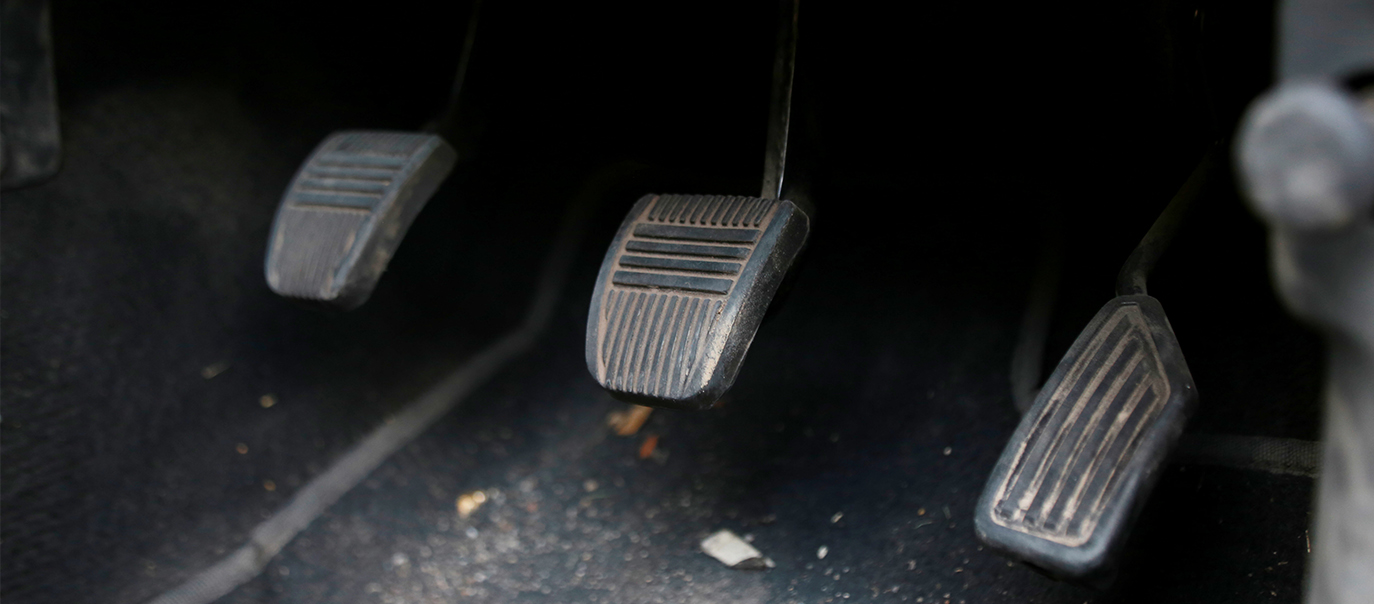
I have practised, setting the gas and finding the bite on very quiet industrial estates with the vehicle being allowed to crawl very slowly forward and then getting the pupil to apply the foot brake and clutch to stop. This gets a pupil to learn to feel how the pedals work, as no amount of observation can teach this as it’s a psychomotor skill that has to be learnt through the sense of feel.

© David Allen
‘A’ Grade Driver Training

Was this article helpful?
YesNo